

Fashion Treasures from the Greeks in Washington Museum
Curated in collaboration with the University of Washington, Department of Museology
Video: Experimental archaeologist Vasi Birchwood.
What you wear is closely tied to who you are.
From the peplos to haute couture designers like Jean Dessès or Celia Kritharioti, fashion has always played a central role in Greek culture. In turn, Greek dress reverberates through modern fashion, in daily life and pop culture alike. While most research on Greek fashion history focuses on the ancient Classical period, the Greeks in Washington Museum houses a large collection of modern Greek clothing objects, giving fashion enthusiasts a lens into an under explored area of dress history.
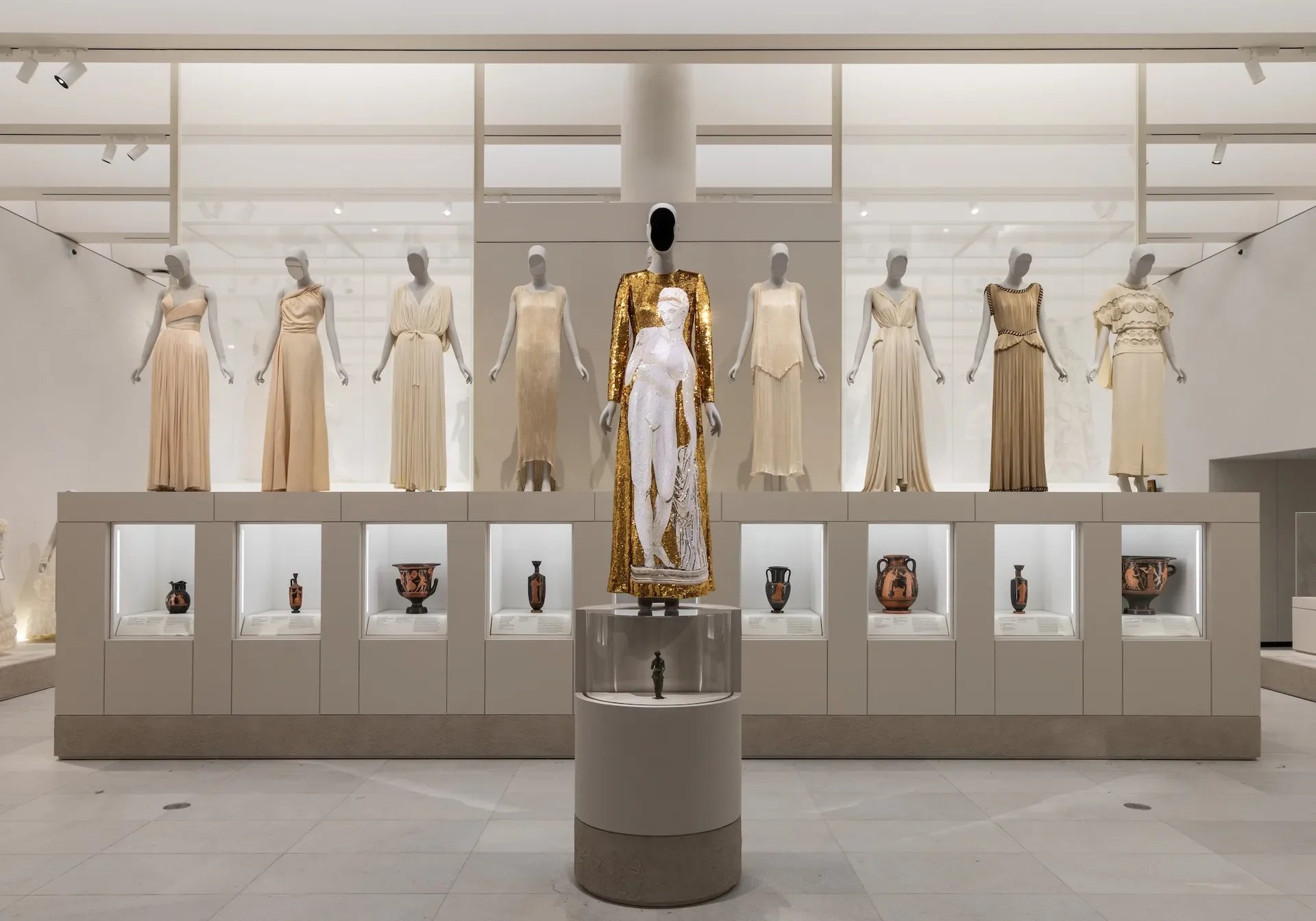
Costume Art exhibit (May 2026 - January 2027) at the Metropolitan Museum of Art’s Costume Institute, displaying modern gowns and ancient Greek vessels which inspired designers.
(Image credit: ©Anna-Marie Kellen / The Metropolitan Museum of Art).
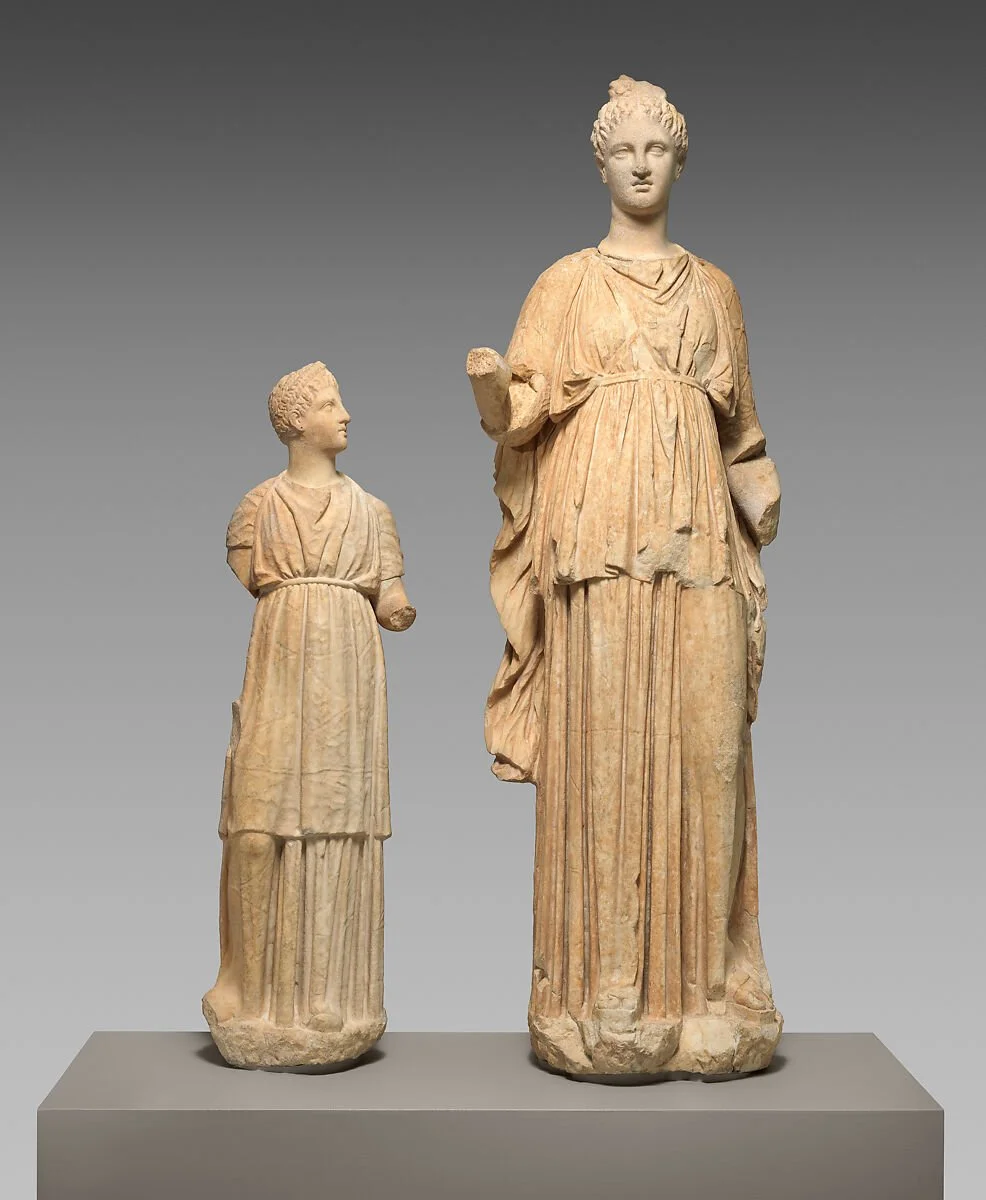
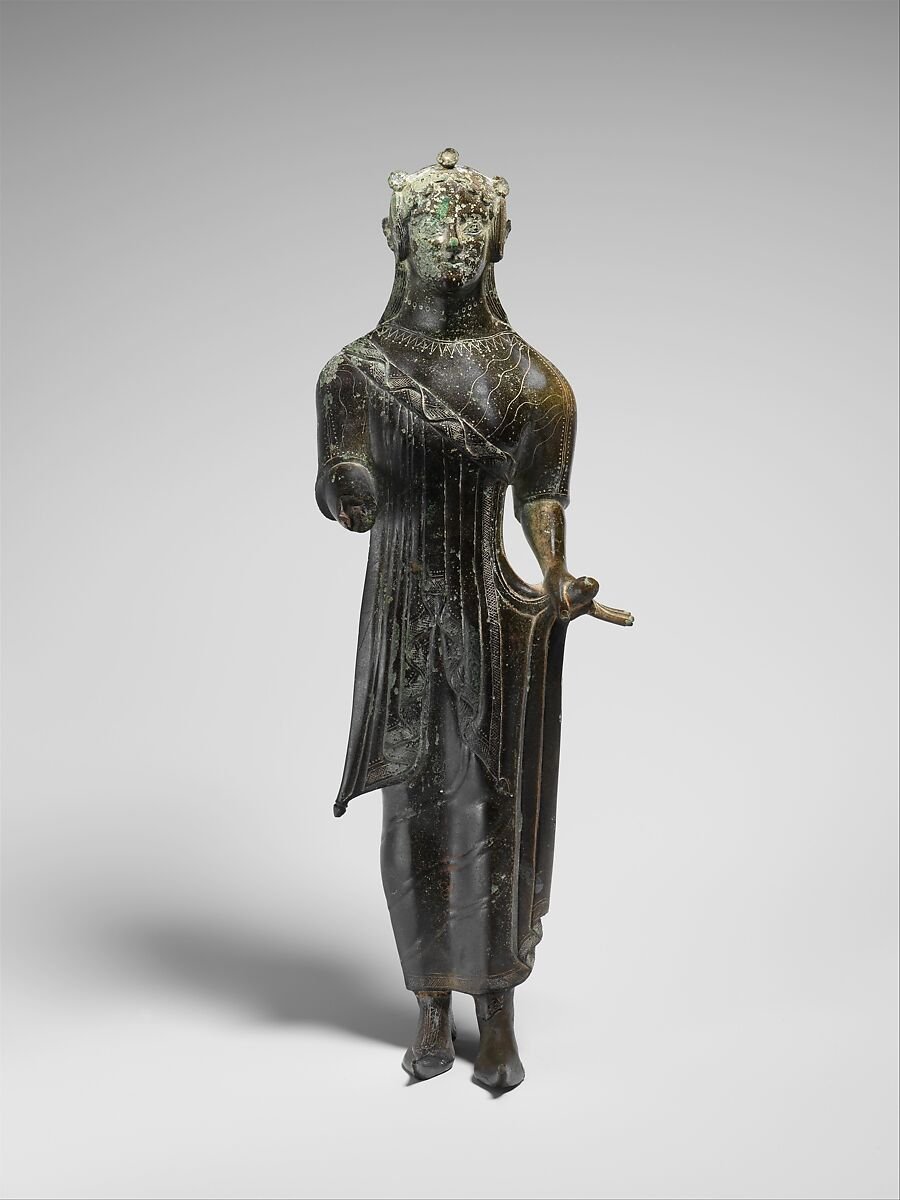
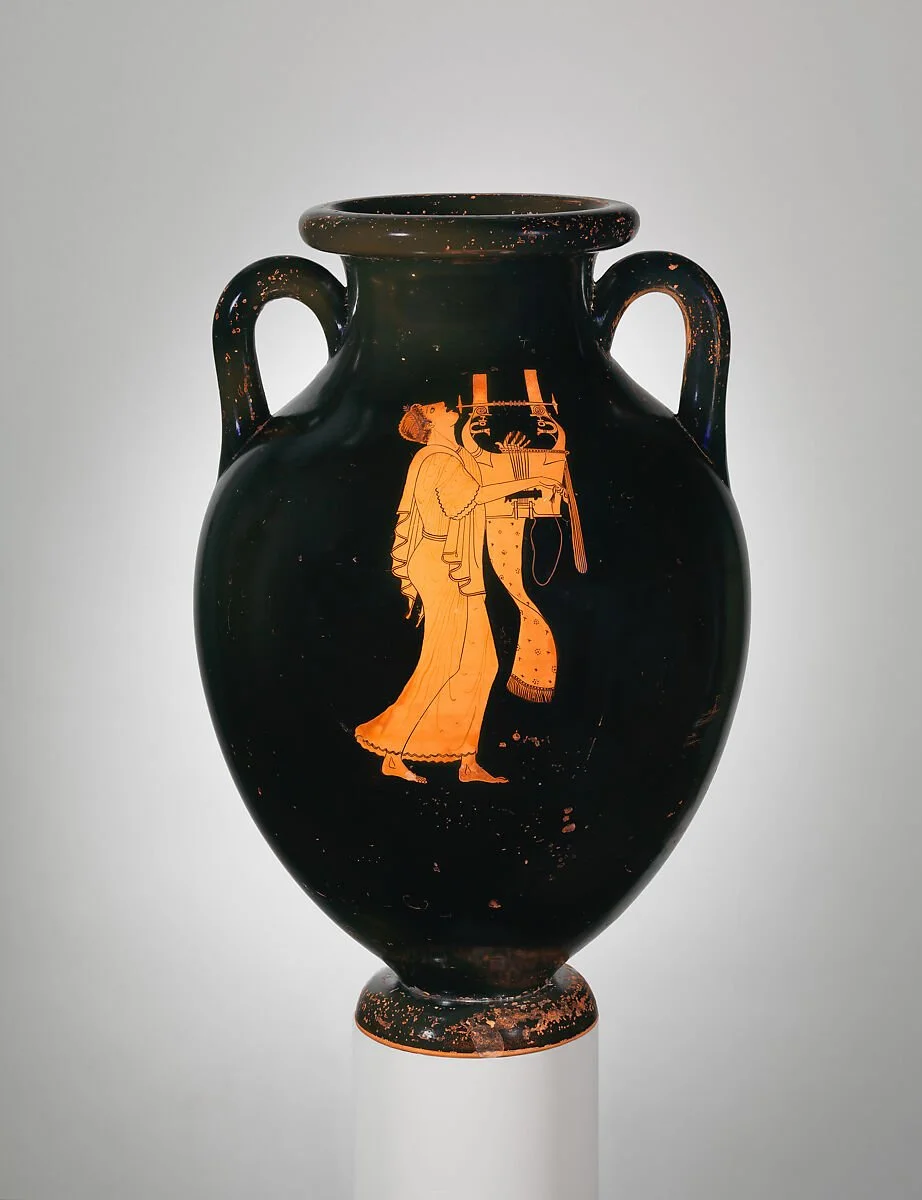
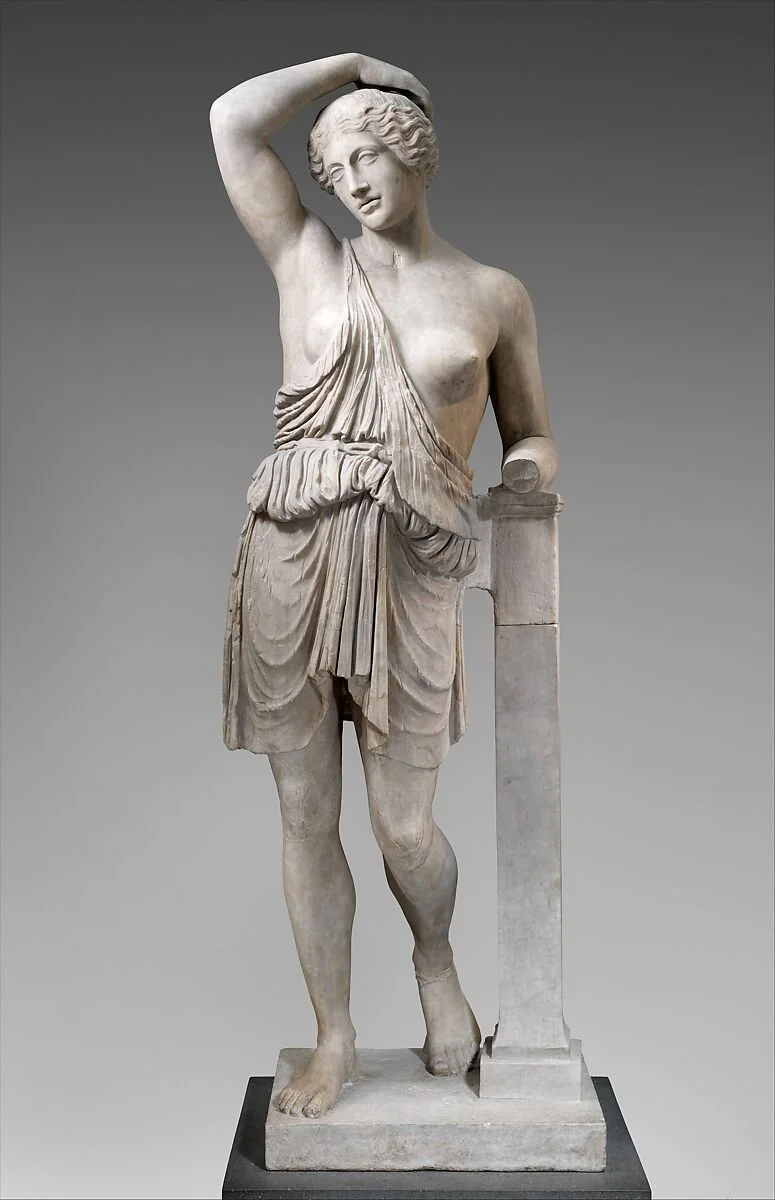
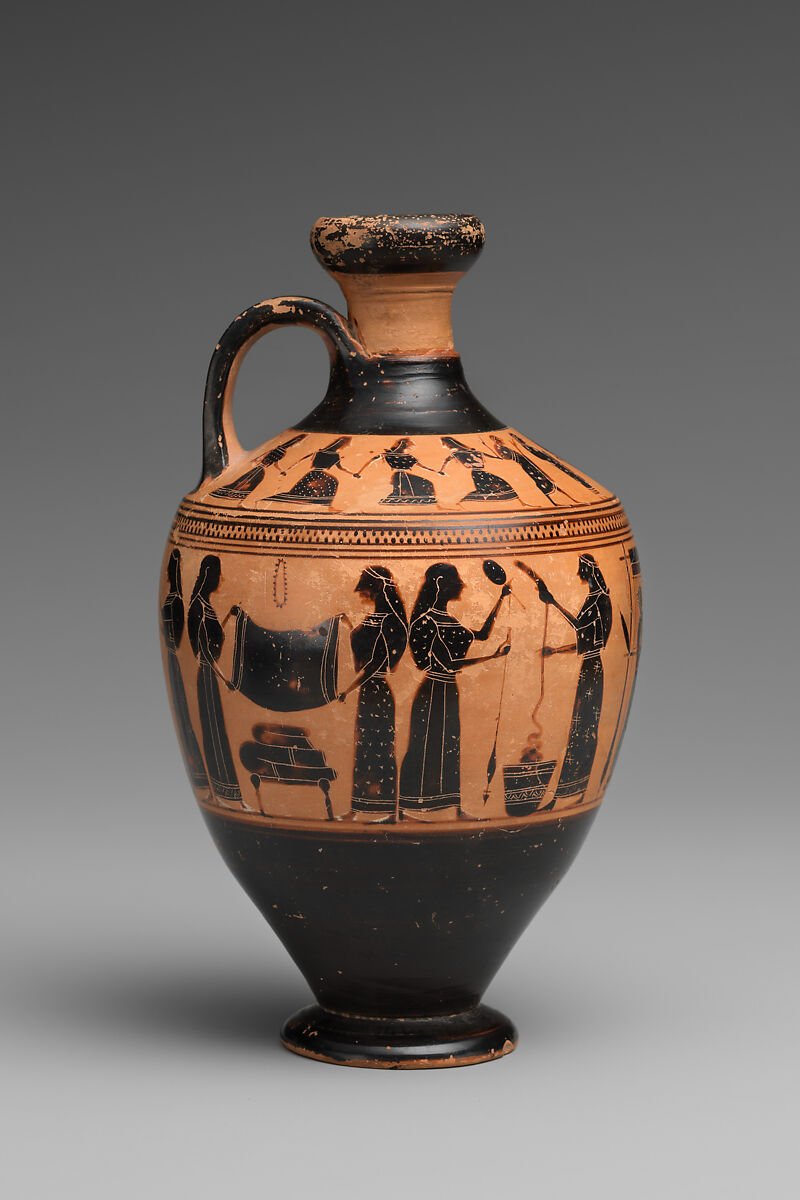
This digital exhibit celebrates and explores the Greeks in Washington Museum’s collection of dress artifacts and offers a wider historical context for highlighted pieces by comparing them to similar objects in other museum collections across the globe.
Objects showcasing Ancient Greek dress at the Metropolitan Museum of Art.
The Greeks in Washington Museum’s clothing collection can be divided into five themes, each explored more in depth below: Wedding Attire, Daywear, Accessories, Folkwear, and Children’s Clothes. Some objects in the collection were donated with documentation and provenance data attached, while less is known about others. Every object speaks to the dedication of Washington community members, collectors, and storytellers who lovingly curated and archived these fragile artifacts of local Greek history. The word “museum” is rooted in the Greek word for the muses, the nine goddesses of the arts, and the Greeks in Washington museum clothing collection is one small but meaningful part of this history.
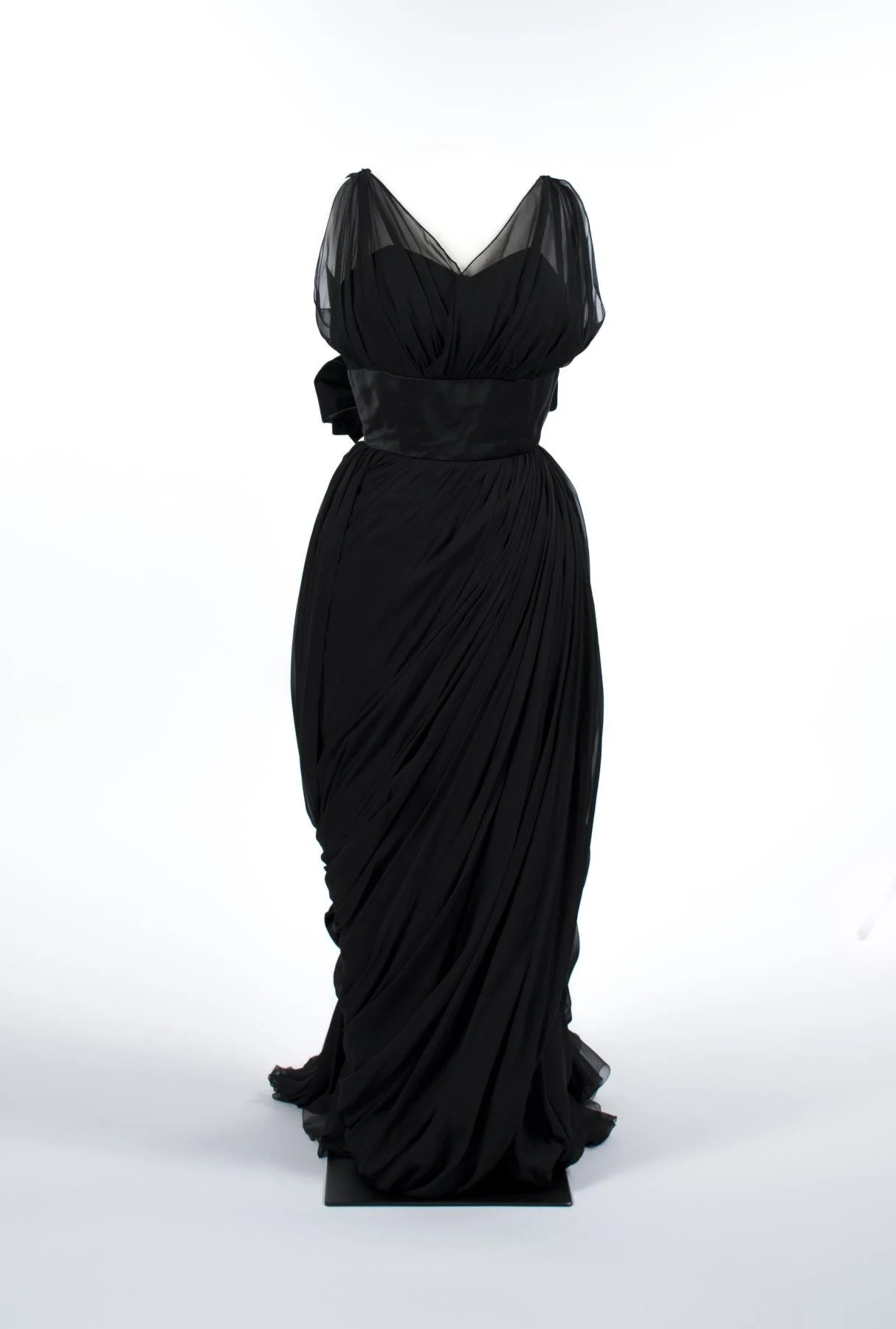
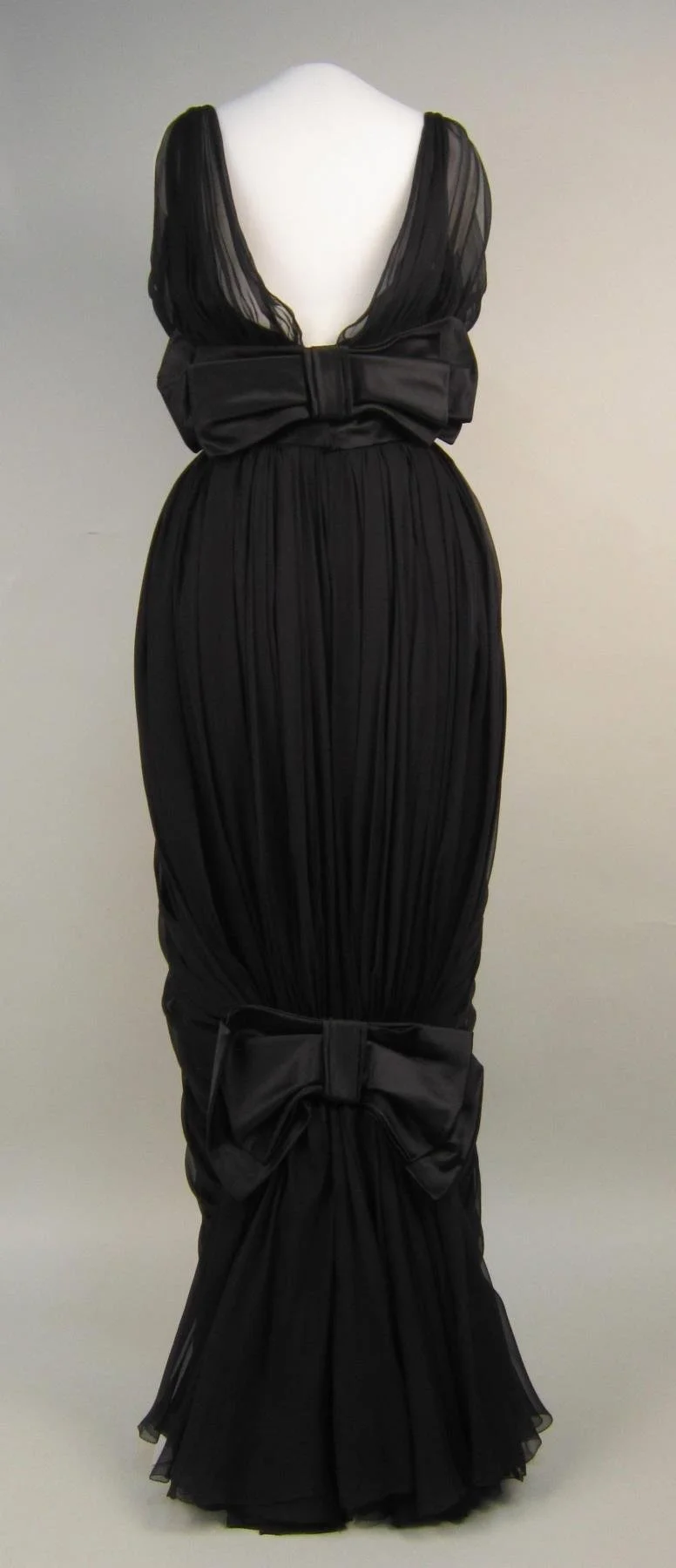
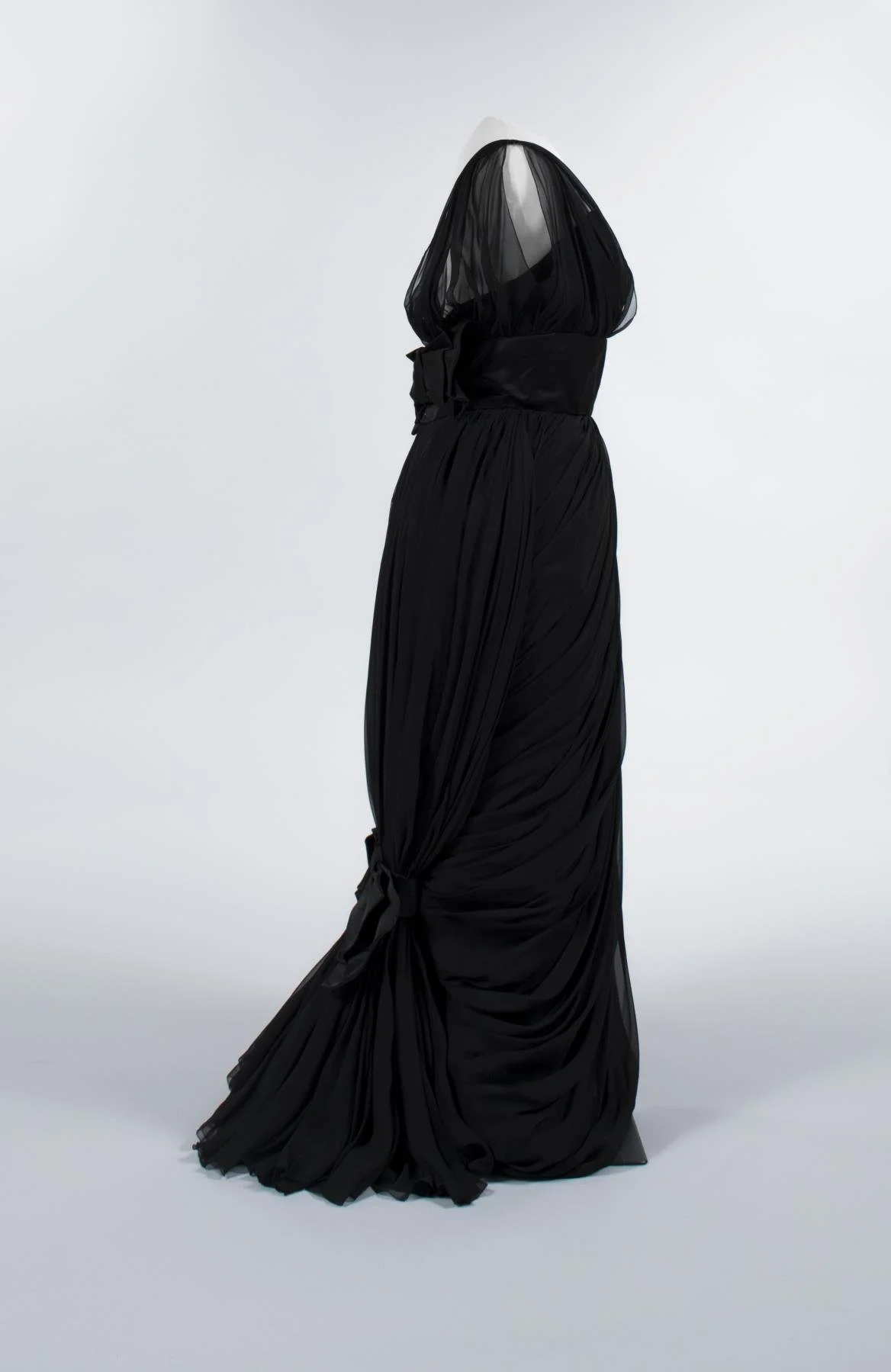
Jean Dessès, black silk chiffon and silk ball gown, ca. 1955, Museum of History and Industry, Seattle.
Scroll down to explore the museum’s fashion collection and learn more about 20th century Greek clothing practices and their historical roots. As you view the galleries, think about your relationship with your own clothes or traditional dress from your community or ancestors. What memories, narratives, and meanings do your clothes hold? Every stitch tells a story.
Video: Archaeology Professor Susanna Harris at the University of Glasgow presents her research on Ancient Greek dyed drapery.
Video: Celia Kritharioti Spring/Summer 2026 collection.
Greek Wedding Attire
In the 19th century, Queen Victoria’s highly publicized marriage to Prince Albert popularized the white wedding dress we all instantly recognize today. You can see many examples of Greek women in Washington wearing such wedding dresses in Greeks in Washington Museum photography collection.
Many Greek wedding traditions brought from the old country are practiced in Washington today. For example, the museum houses a collection of boubouniera, white candy-coated almonds given as wedding favors, symbolizing the bittersweet nature of marriage. You can read more about this Greek wedding staple online at “Greek Wedding Favors”. The museum boasts garments worn by wedding guests and the bride.
Collection Spotlight
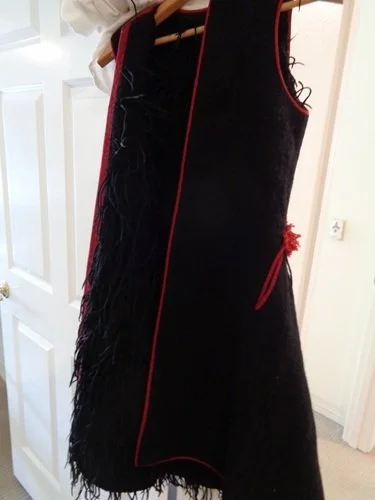
Greek Shepherdess Coat
Designer Unknown
Peloponnesian
1900 - 1920
Donated April 11, 2025
2025-04-001
According to the details given by the donor, this coat is handmade by an artisan—we don’t know if it was a professional tailor or home craftsperson—of the Peloponnesian region (the large peninsula that forms the southernmost part of mainland Greece) and was most likely made for a wedding. Approximately 46" long and 15" wide, it was probably created for a specific person.
This garment is called a “shepherdess coat” due to its mountainous origins. It was rarely worn. The coat is sleeveless so that the wearer could layer a long white undergarment beneath it, usually with flowing sleeves and sporting decorative embroidery, making it fit for special occasions. The coat is made of heavy black wool, possibly spun from goat hair, has pockets, and tassels on its interior. Bright red striping offsetting the black adds a celebratory flair. These garments remained popular into the 1960s.
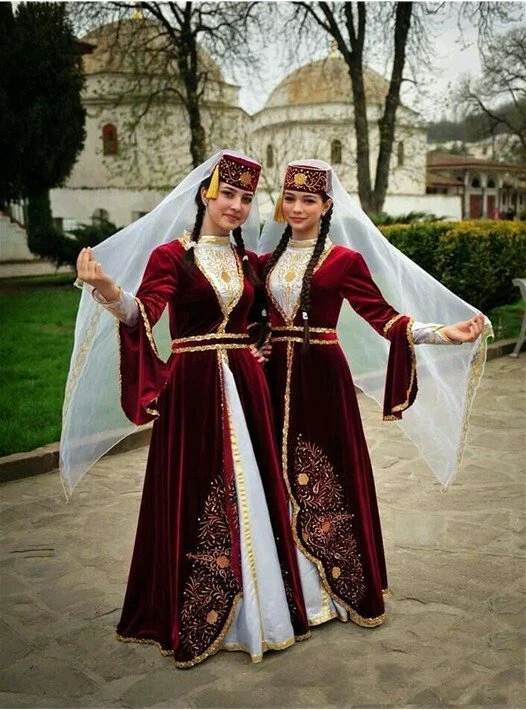
Example Image
This picture was donated to the museum with the Shepherdess Coat to demonstrate how it would be layered and accessorized for special occasions, including wedding ceremonies.
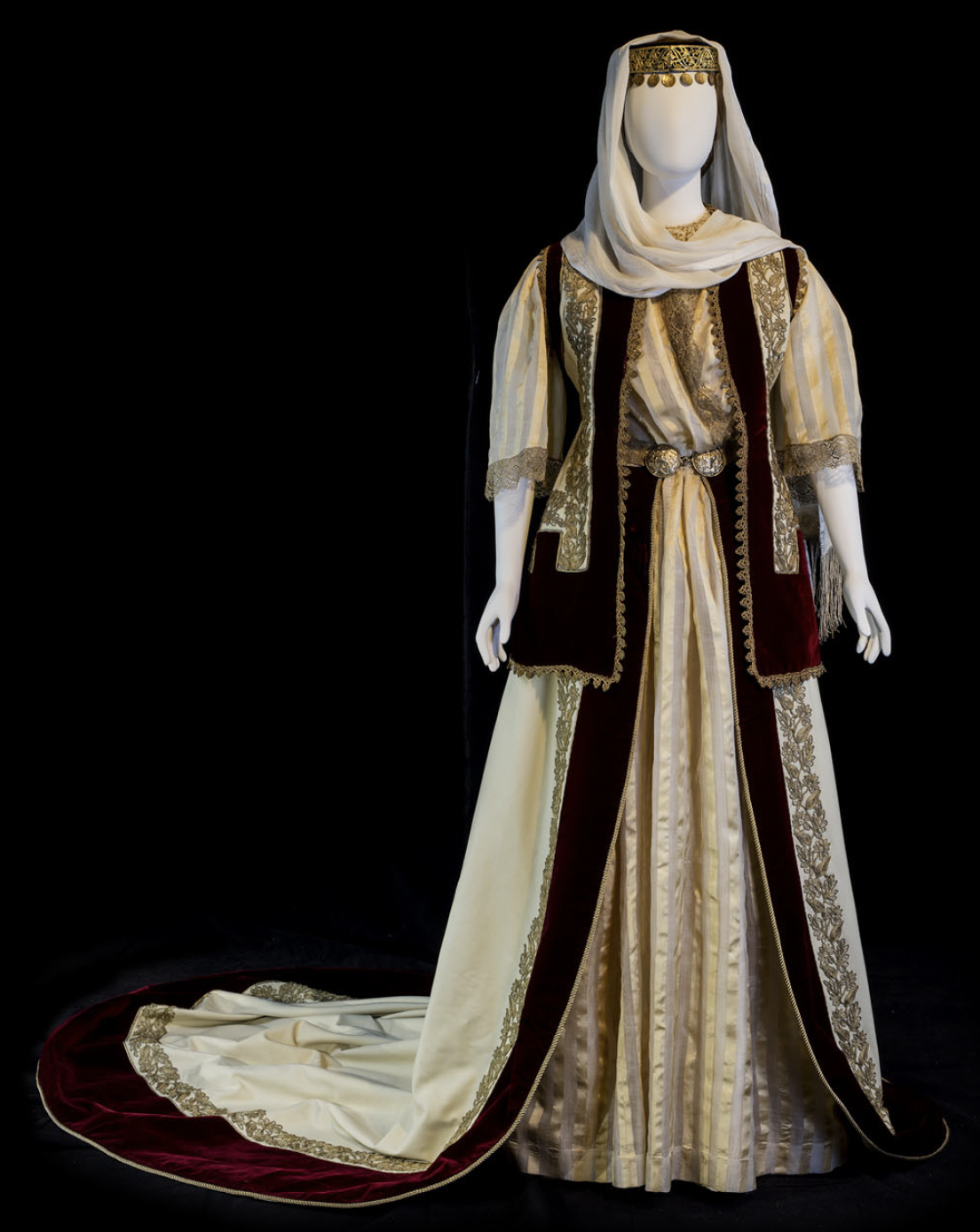
Female costume worn at the court of King George I.
Photograph courtesy of the Victoria Karelias Collection of Traditional Greek Costumes—Lyceum Club of Greek Women of Kalamata.
Video: Greek Women’s Costumes: Basic Style and Influences from The Benaki Museum.
Want to learn more about Greek wedding history? Visit the Acropolis Museum online. Then, check out two more modern wedding artifacts held in the Greeks in Washington Museum below.
Further Wedding Attire spotlights
Michael Deligan and Eleni Paisopoulos Wedding Garments
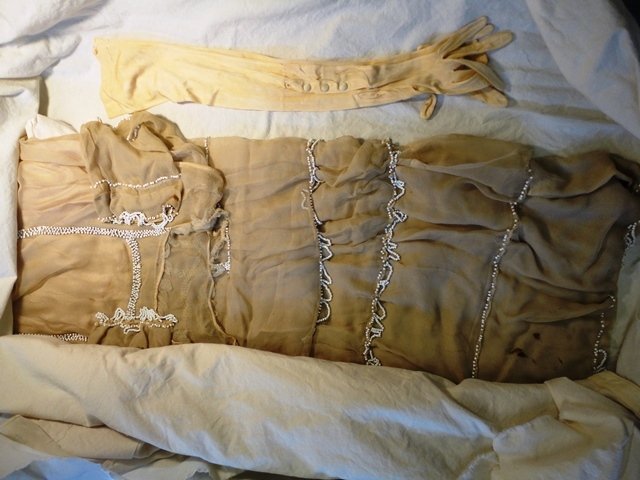
Designer Unknown
1922
Donated February 2, 2016
2016-02-003
This pictured lot includes several garments specifically made for the wedding of Michael Deligan to Eleni Paisopoulos, two Greek families who had immigrated to the Pacific Northwest, on the family farm in Penewawa, Washington in 1922. It includes a camisole (an undergarment), dress, gloves, shirt, collar, and bow tie. The materials are very fragile, and showcases the care and detail that went into making such clothes.
Trousseau of Aphrodite Nerantzini Mulenous
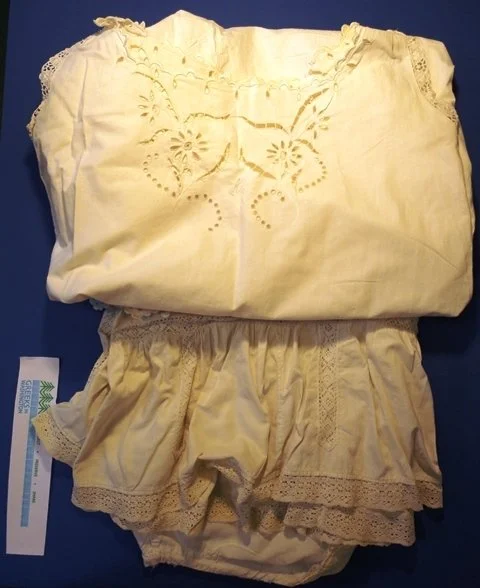
Aphrodite Nerantzini Mulenos
1922
Donated January 9, 2014
2014-01-009
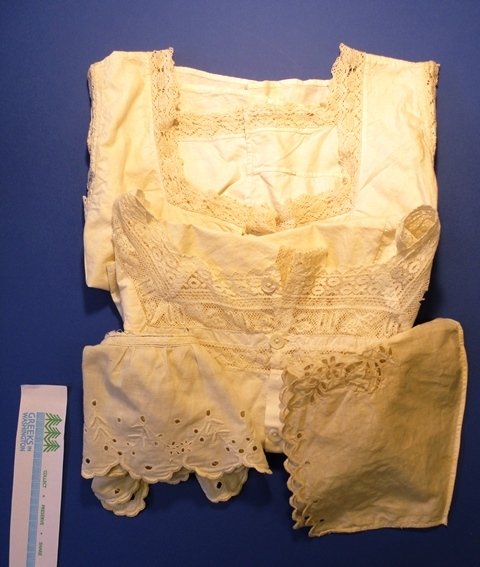
A trousseau is set of dowry items specifically gathered for a bride to bring to her husband’s home upon marriage. The trousseau collection is usually held in a chest or trunk, and historically contained clothing items, such as this example from the museum’s collection. Aphrodite Nerantzini Mulenos was both designer and bride, having made these garments in Greece for her upcoming marriage to Demosthenes Mulenos. The lace and embroidery are particularly impressive elaborations.
Daywear
Together, the museum’s collection of more casual daywear focuses on blouses both functional and beautiful. Visually, all these shirts are similar in cut and style to tunics, an ancient staple of Greek fashion made new across the 20th century. These garments are versatile, meant to be worn for decades, and each was probably made to fit its specific wearer, possibly at home from a pattern rather than purchased at a store. They can hang loose from the body or be belted or cinched to fit the many changes life brings. There a timelessness about these flowy tunics, each imprinted with a past owner’s everyday habits.
Collection Spotlight
Effie Wells Collection
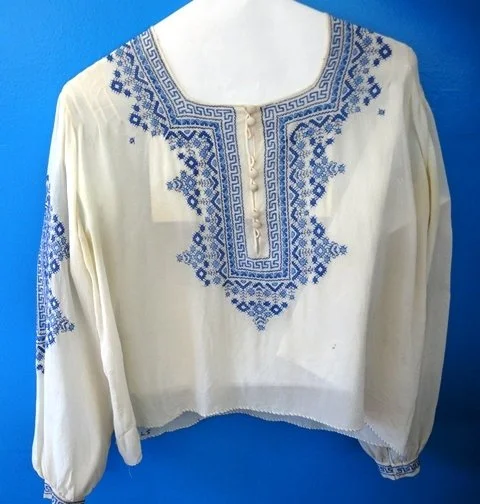
Designer unknown
1970s
Donated July 20, 2016
2016-07-009
The museum’s collection includes a number of women’s blouses worn on an everyday basis. These garments needed to be sturdy enough to be worn for work, but were also stylish, decorated with lace, embroidery, and tassels. This top is made from silk chiffon. Intricate blue embroidery enhances the neckline, sleeves, and cuffs. As can be seen in the picture below, this blouse was worn with a mid-length skirt, a popular style in the 1970s. The owner, Efthemea “Effie” Wells, stands beside her daughter Pauline and husband Pete Wells in front of the Lotus Café, which the family owned and operated. Learn more about this local history ”Many Strangers, Two Kisses”.
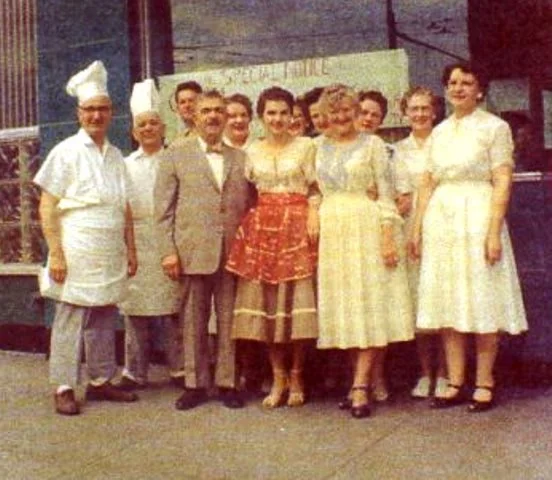
This image was donated alongside the tunic examined above, worn by Effie Wells, pictured second from the right on the first row.

Still from Mamma Mia! Here We Go Again, 2018, directed by Ol Parker.
Breezy, lightweight tunics with short sleeves suit the Mediterranean climate, in reality and pop culture representations of Greek dress.
Video: Classicist Cinzia duBois on the mythological history of Greek embroidery and weaving.
Spinning, weaving, and embroidery were traditionally considered women’s work throughout European history, including in Greece. Women of all social classes made clothes and other textiles as part of their daily domestic labor. Reflecting this widespread cultural practice, these arts feature in many Grecian myths, from Ariadne to Arachne to Odyssey’s wife Penelope.
Further Daywear Spotlights
Greek woman’s tunic
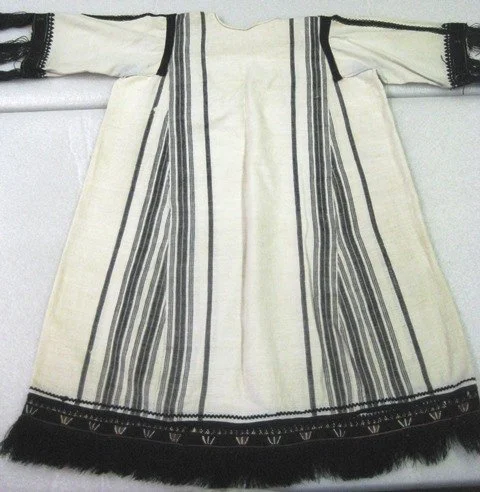
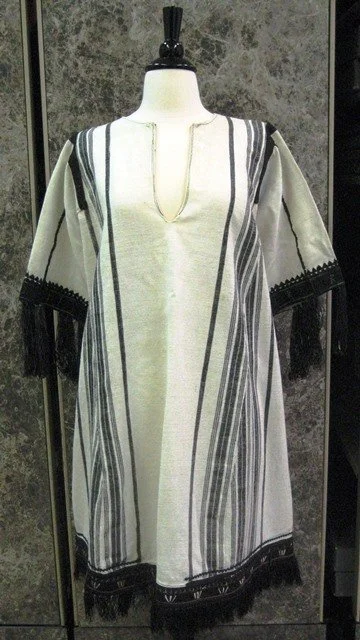
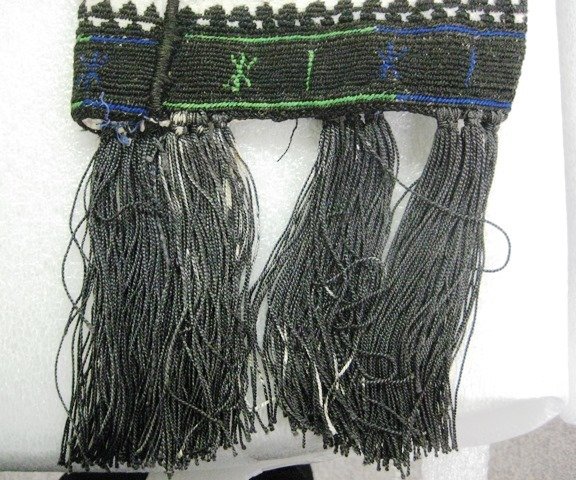
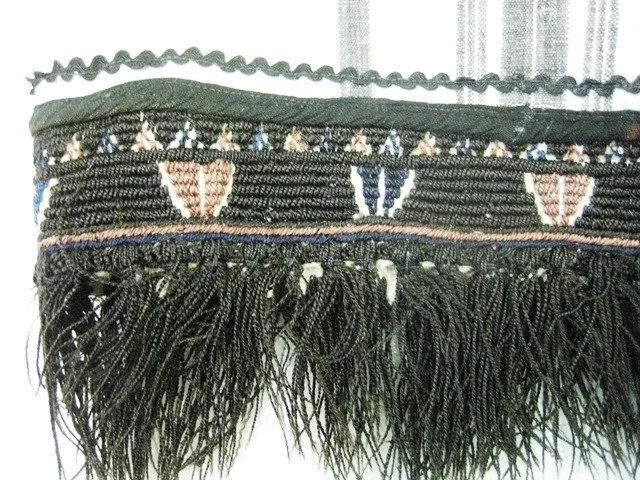
Designer unknown, set of 4 images
Early 1900s
Donated April 19, 2017
2017-04-003
This early 20th century tunic is a rare survival. According the donor, this white shirt bears close resembles to the type of dress traditional to the Karagounes, a specific sub-group of people in the Thessaly area of Greece. The open v-neck and wide sleeves would have allowed for layering according to the wearer’s needs. It boasts a riot of flair: black stripes woven into the shirt itself, with matching black tassels at the cuffs and fringe on the hemline. The thick embroidered border by which the fringe is attached features geometric shapes in blue, green, and pink tones.
Greek silk blouse
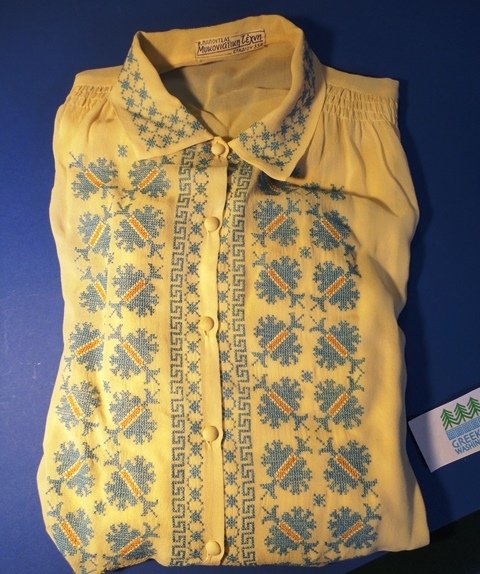
Designer Unknown
1950s
Donated February 9, 2012
2013-11-004
This cream blouse was purchased from Greece for Ethel Barbas, a first generation Greek-Turkish immigrant, by her mother, Fotini Evans. You can learn more about Ethel Barbas’ story, including her work at Boeing and her keen interest in butterflies here. The intricate blue and orange embroidery forms on the collar and front of the shirt recall traditional Greek patterns found across the Mediterranean, including in mosaics and architecture.
Greek blouse Belonging to Fotini Moulas from Leros, Greece
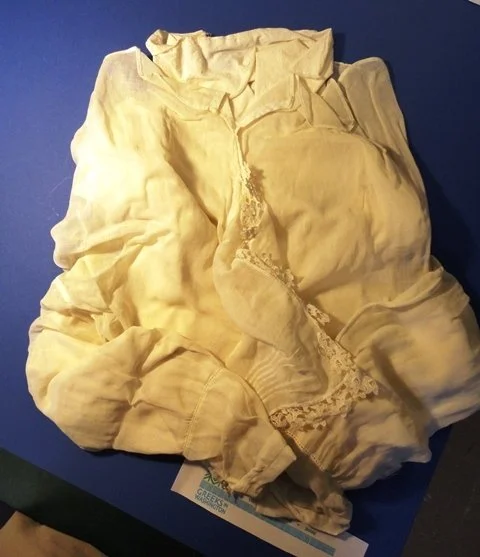
Designer Unknown
As early as late 1800s
Donated July 20, 2016
2016-07-009
Accessories
No outfit is complete without accessories, and fortunately the Greeks in Washington Museums showcases many such items: jewelry, a tie, a pair of shoes, a small collection of fez hats. Each item is unique and added the finishing touches to the wearer’s ensemble. They are all modern items tracing back to the long history of Greek fashion, of which traditional wear tended toward the ornate and highly decorative. The right accessories can transform and elevate any outfit. Which of the following pieces would you add to your wardrobe?
Collection Spotlight: Greek Silver Jewelry
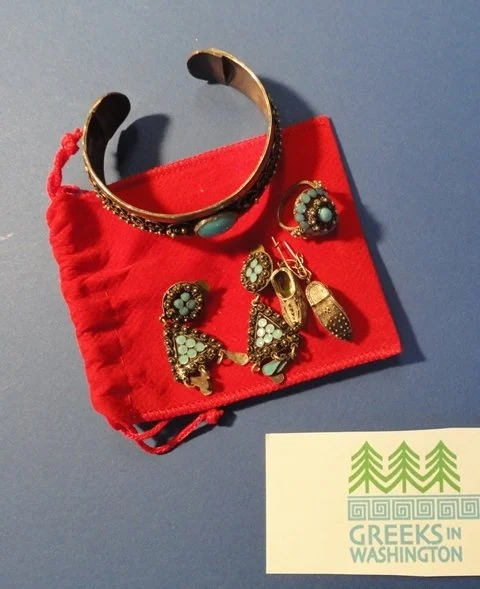
Greek silver jewelry sent from Greece as gifts - included are a bracelet, two pins, a ring and set of earrings with inset turquoise stones - the earrings are small shoes
Designer unknown
20th century
Donated April 11, 2011
2012-04-009
This suite of silver jewelry includes a bracelet, two pins, a ring, and set of earrings with inset turquoise stones. It was donated to the museum in this red bag, and the donor notes indicate the pieces were sent from Greece as gifts. Note the matching details in the silversmithing such as silver balls for more reflective surfaces, and dangling pendants for added movement on the pins, as well as the repeated use of turquoise for pops of color.
According to the Museum of Jewelry, turquoise is believed to ward off the evil eye in cultures across the Mediterranean. Look closely at earrings and you’ll see they’re in the shape of a small pair of shoes! These shoes closely resemble the narrow shape and pointed toe of traditional Greek footwear, including the pair of Evzone shoes listed below. Greek jewelry design is still a booming industry today.
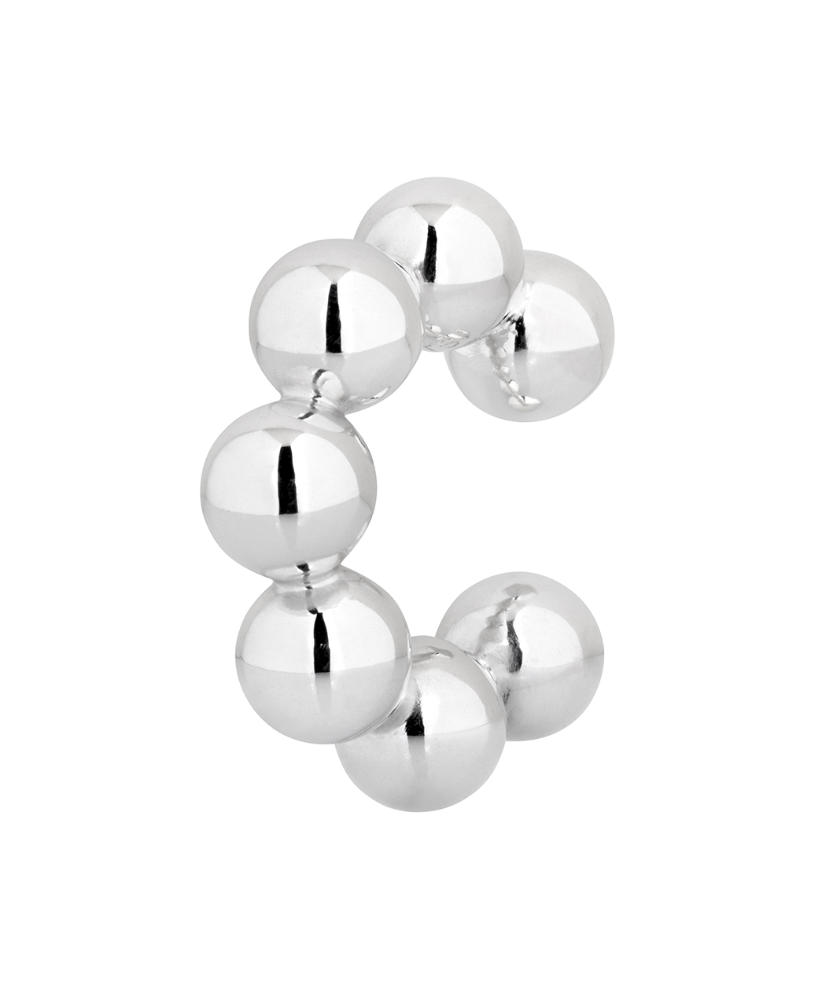
Elena Votsi (born 1964)
Multi ball silver ring, sterling silver, 1992.
Elena was born on Hydra Island, then moved to Athens and eventually London to complete her training as a master jewelry artist. She is most known for winning the competition to redesign the Summer Olympic Games medal in 2003. Her workshop still creates elegant designer pieces.
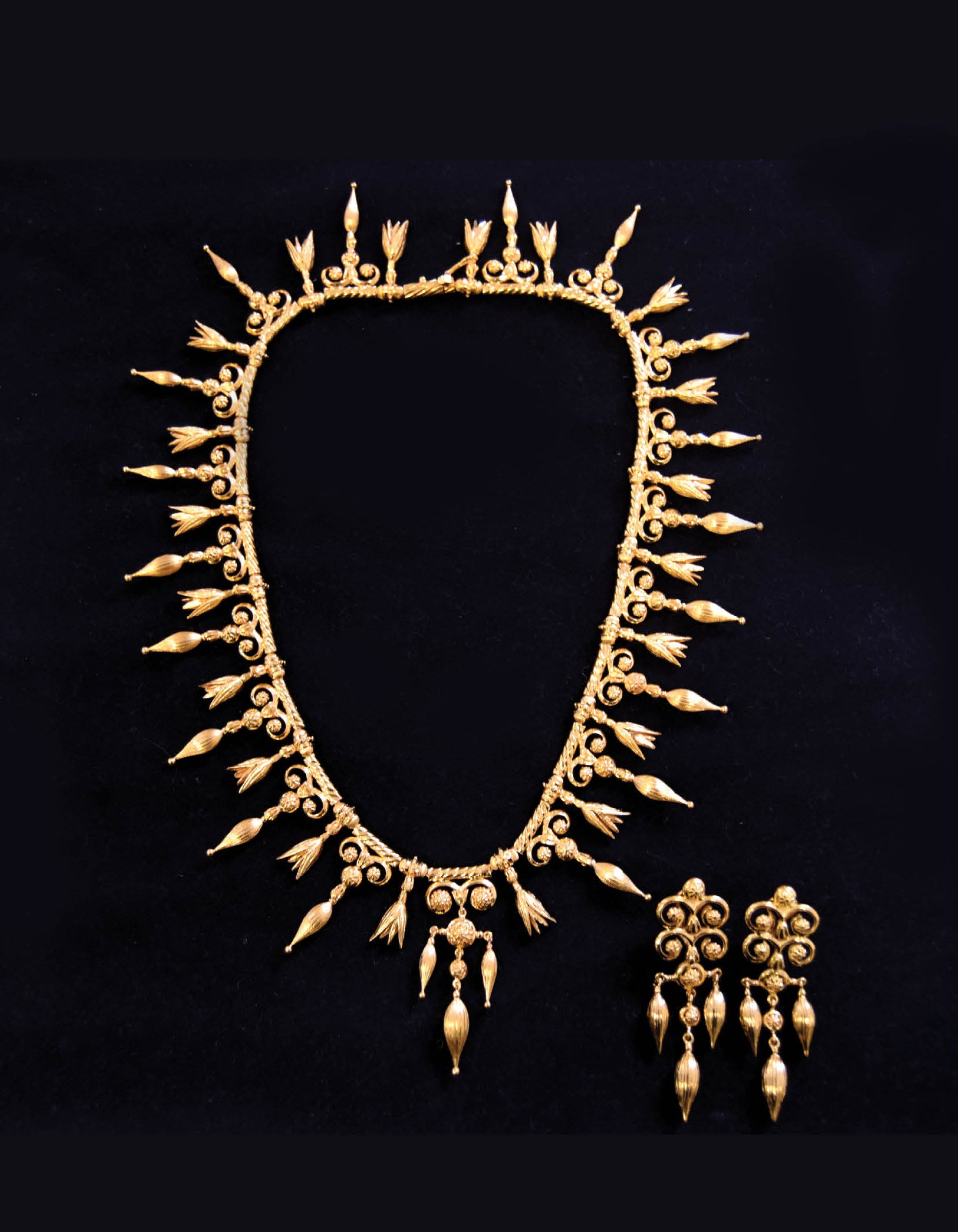
Ilias Lalaounis (October 4, 1920 − December 30, 2013)
Necklace and earring ensuite, 18 carat yellow gold, via Cypria Auctions Gallery.
Athens-born jewelrymaker Ilias Lalaounis gained international acclaim for his goldsmithing skills and innovative modern designs based on Greek historical jewelry. His studio still produces jewelry in his style today. He is the only jewelry artisan to have been inducted into the Académie des Beaux-Arts.
Video: The Benaki Museum explores the art of Ancient Greek jewelry making.
Watch this video to learn more about the craft and power of ancient Greek jewelry.
Further Accessories Spotlights
Tsarouchia - Shoes for Evzone Costume
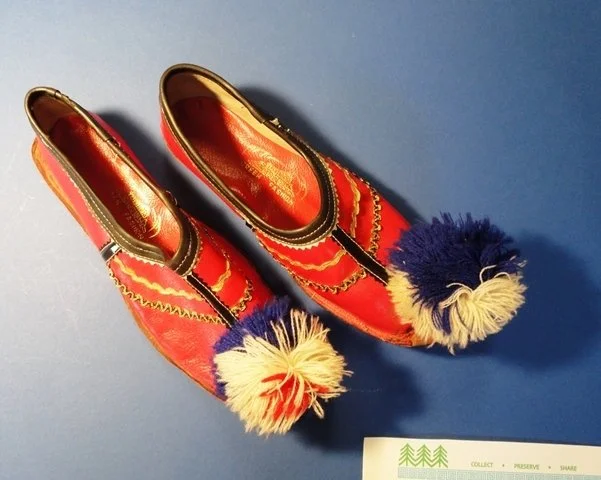
Designer Unknown
1950s
Donated May 2013
2013-06-002
Tsarouchia are the specific type of footwear required as part of an Evzone’s uniform. This pair sports all the traditional hallmarks of Evzone shoes, red in color with contrasting yellow-gold stitching with white and navy pompoms frilling the toes. This pair are most likely replicas. On the sole is a stamp with the words “Greek Fashion,” perhaps a label from a now-defunct brand.
AHEPA men's tie
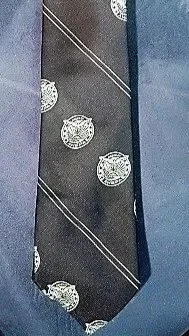
Designer Unknown
1930s - 1950s
Donated September 12, 2017
2017-09-001
Ties as recognizable in their contemporary form became popular accessories in the 19th and early 20th centuries, and have never gone out of style. Ties signal masculinity (and are often worn to challenge fashion gender binaries), ceremony, and professionalism. The repeated symbol on this tie is the Order of AHEPA seal (see below). It is 100% polyester, navy blue body with lighter blue accents. It was owned and worn by Puget Sound oceanographer Eugene Collias.
AHEPA Fez (1)
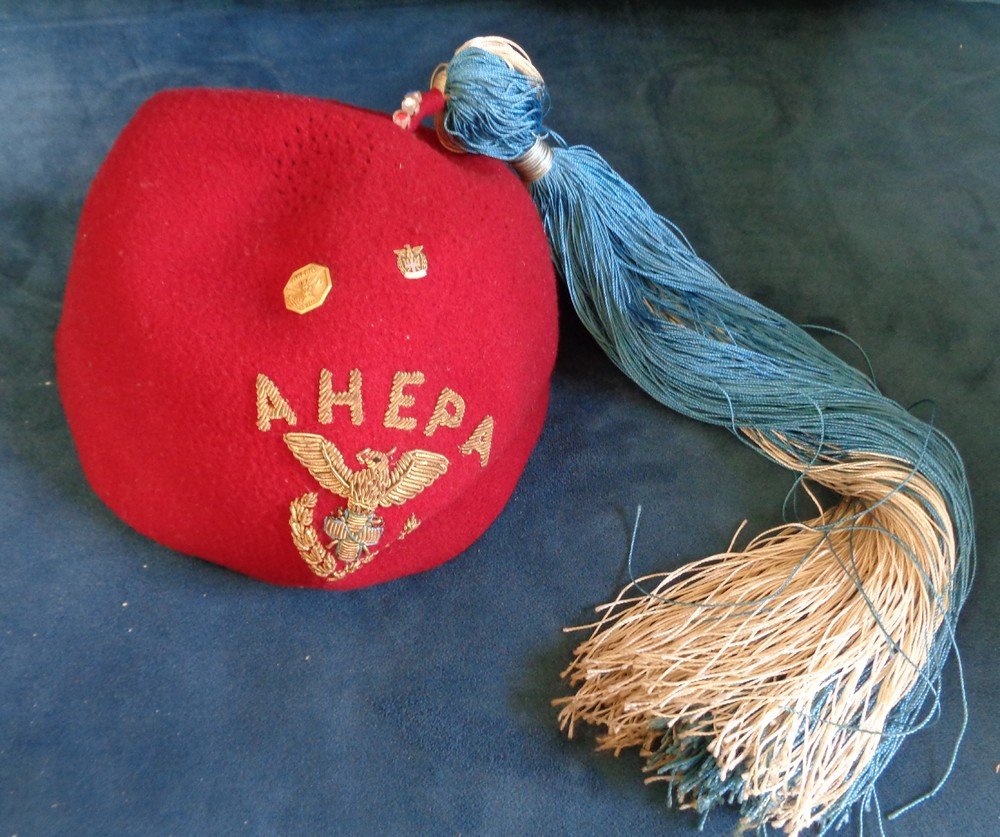
Rose-Lipp Regalia Company, Boston
1900s
Donated May 20, 2018
2018-05-003
AHEPA Fez (2)
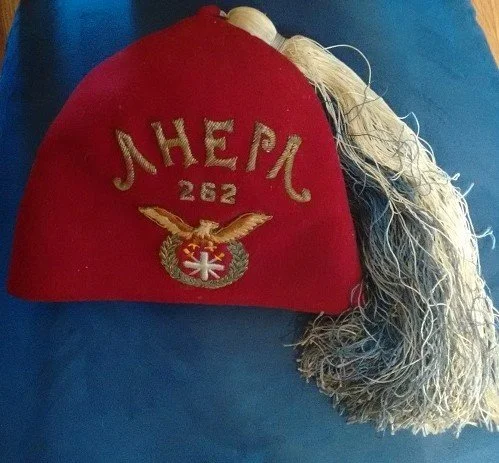
Nudelman Brothers
1930s
Donated September 12, 2017
2017-09-002
Fez hats have been in use since the early 19th century across Eastern Europe, North Africa, and the Middle East. They are a part of the AHEPA ceremonial dress. A fez hat can be identified by the skull-hugging cap and conical shape and are usually made of a bright color like this red wool example. A fez often boasts a tassel; this one is blue and white to reflect the colors of the Greek flag. This fez belonged to Evan Collias, member of the 262 AHEPA chapter in Centralia, Washington. The AHEPA seal is embroidered in gold frame with green leaves.
AHEPA fez (3)
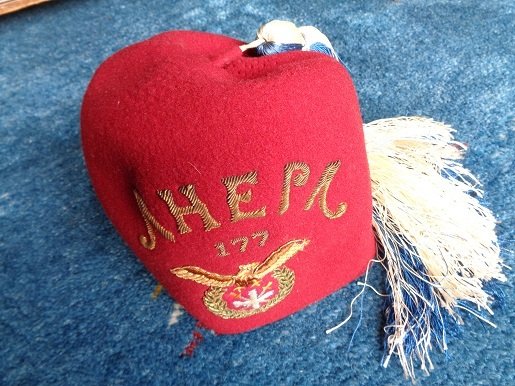
Nudelman Brothers
Circa 1950s
Donated September 6, 2018
2018-09-032
The museum has three Fez hats in its collection, spanning the 20th century. This circa 1950s headgear is made of heavy red felt with a blue and white tassel, and displays the AHEPA seal and chapter 177 designation. This artifact, like the previous hat, was made by the Nudleman Brothers Uniforms company, founded in 1920 in Portland, Oregon by Eugene Nudleman Sr. The store was part of a thriving Jewish community. You can learn more about company and its founder from the Oregon Jewish Museum and Center for Holocaust Education.
Folkwear
A cornerstone of the museum’s clothing collection is folkwear, bearing traditions from the old country imported into 20th century Washington. A focus of the collection is Evzone uniforms. Evzone were light infantry units in the Hellenic Army. The Greek word evzōnos, meaning “well-girt,” was used in Classical Greece to describe light infantry soldiers, so the group has occupied Greek military history for centuries.
Today, they no longer see combat, serving instead as the Presidential Guard, a mostly ceremonial unit, but the outfit is still heavily associated with Greek military presence. To the modern eye, these garments probably look garish and strange for military uniforms, but throughout history, many European armies wore bright, flashy clothes as regulation, to show off the wealth and might of their country, stylishly strong. The museum holds both original and reproduction Evzone uniform—called a foustenela—pieces and ensembles listed below. You can learn more about the Evzone, including the complexities of their outfits, from the Ditsong Museums of South Africa.
Collection Spotlight
Greek Ezvone Costume with Jacket, Shirt, Skirt, Leggings, Shoes, and Sash
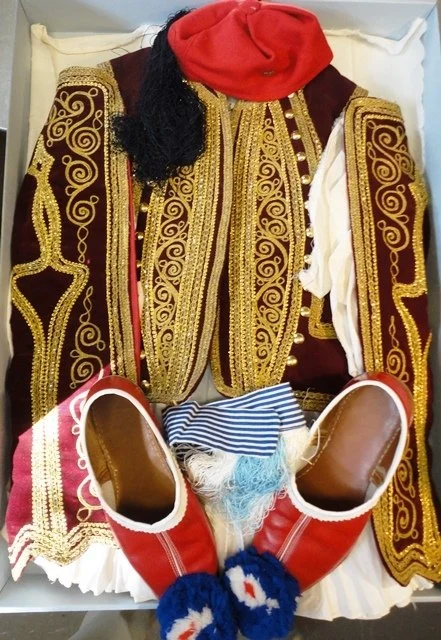
Designer Unknown
Mid 1900s
Donated May 28, 2014
2014-05-012
This is a replica Evzone foustenela belonged to the family of Evelyn Heliotis Martinsen. It includes a fully reconstructed uniform: jacket, shirt, skirt, leggings, shoes, and sash. The red jacket features extensive gold braiding and is made of wool, while the rest of the ensemble is cotton. The Evzone uniform was likely designed from traditional Greek costumes worn for special occasions and to church. This reproduction could have been used for similar purposes by the family, or for military reenactments. This amount of flourish in a military uniform was meant to impress and intimate enemy forces.
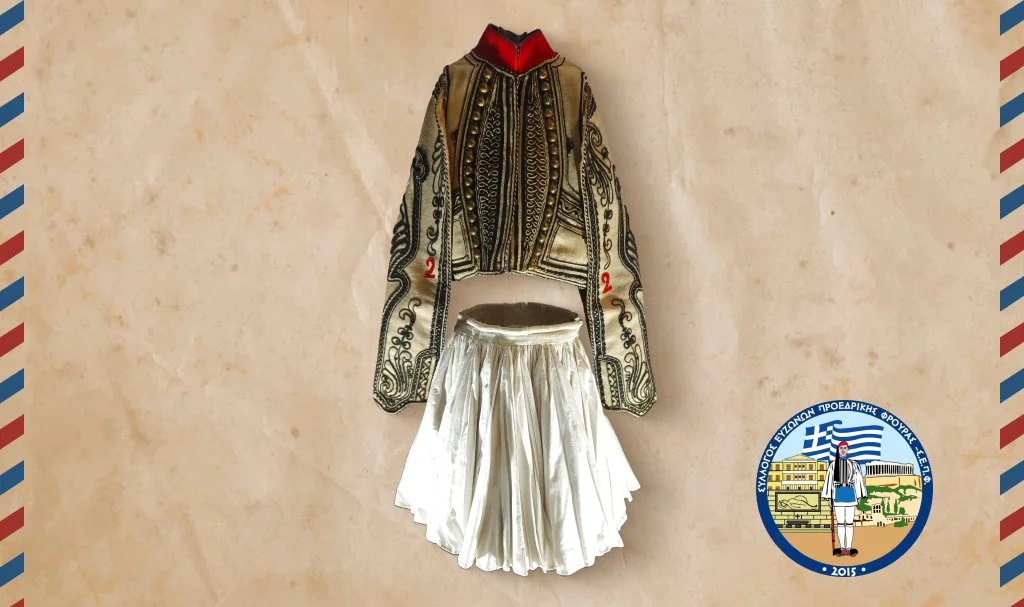
Known as the 1888 Fermeli, this military costume was originally worn by the Evzone Infantry Battalions of the Model Evzone Regiment and the Athens Evzone Regiment from 1888 to 1941. Learn more at Greek City Times.
Imagine an army of soldiers wearing this smart, highly-decorated uniform. This military outfit was adopted in 1868 and worn up until the Greek-Italian War of 1940-1941.
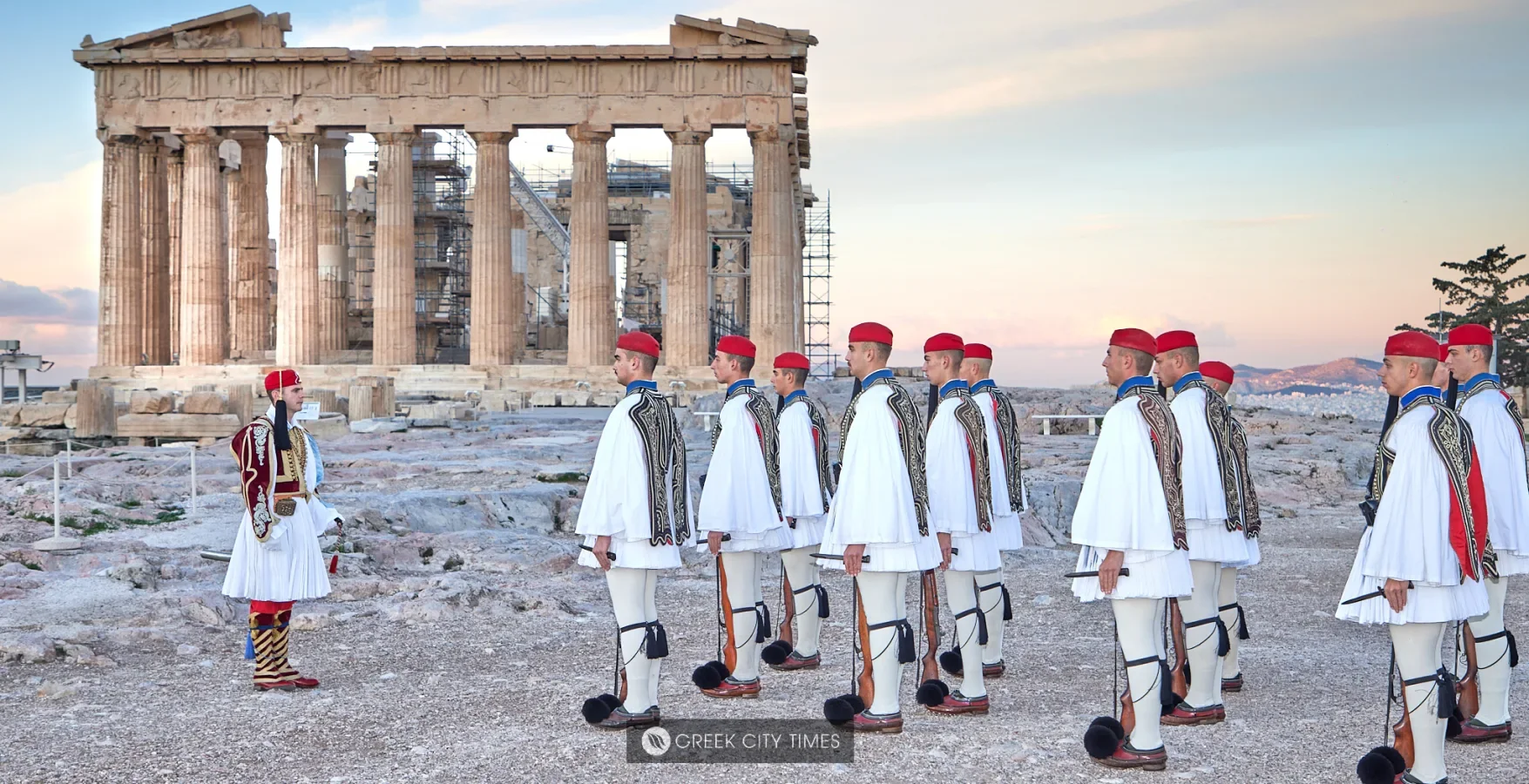
Evzone reenactors outside the Acropolis, learn more at Greek City Times
Further Folkwear spotlights
Authentic Evzone and Amalia Costumes
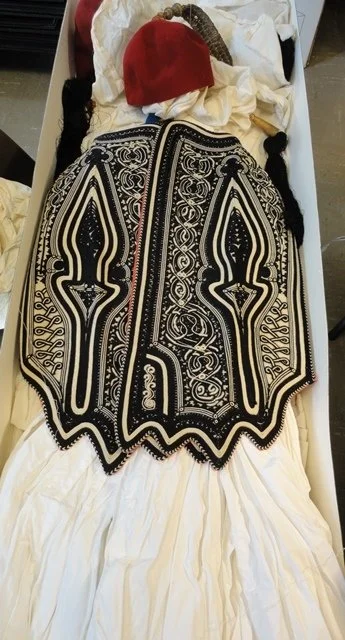
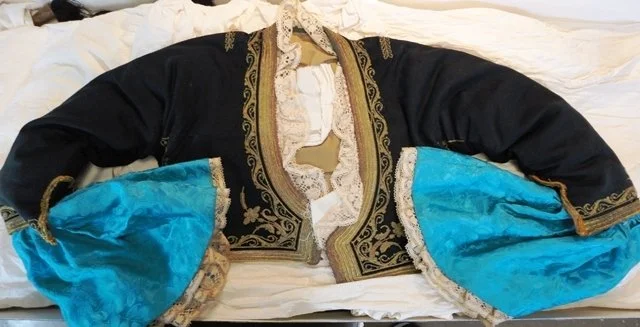
Image: Two Greek folkware costumes from the same collection.
Designer unknown
Early 1900s
Donated November 18, 2013
2013-11-008
Some of the Evzone pieces in this lot are vintage, but supplementary contemporary pieces were added to complete the ensemble. The skirt boasts a whopping 400 pleats! While Evzone uniforms are associated with men, the Amalia is the most recognized Greek women's national costume. Queen Amalia of Greece (December 21, 1818 - May 20 1875) is credited with creating this dress style—featuring a fitted jacket, vest, fez, and pleated maxi skirt—sometimes called “romantic folksy court dress.” Usually Amalia garments feature gold embroidery and vivid colors, seen in this replica. Amalia are worn for weddings, festivals, and holidays.
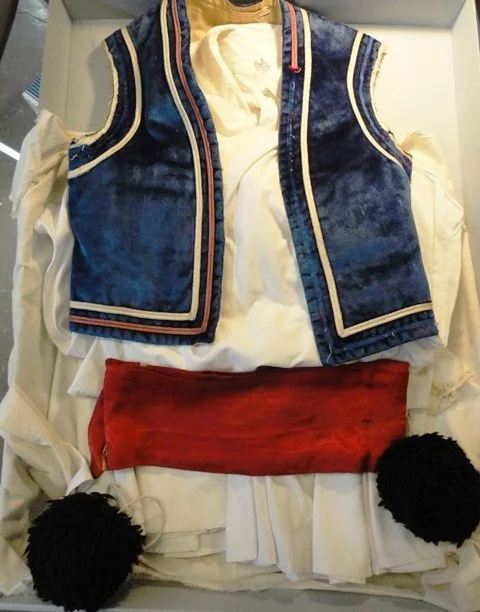
Greek Evzone Costume
Designer Unknown
Early 1900s
Donated April 30, 2014
2014-05-003
This Evzone uniform is special, thought by the donor to be an original from the 1900s. It contains five traditional pieces of the ensemble: blue vest with gold braiding, white cotton shirt, red sash, white skirt, and black pompoms for the shoes (which are not part of the lot).
Some dress historians believe the pompoms often decorating the Evzone shoes were removed before battle, so it’s possible these examples survived after a preparatory removal. This outfit was owned by Nikolaos “Karis” Kanakaris, whose story you can read ”Making Good Parea”.
Children’s Clothes
The Greeks in Washington Museum is intimately concerned with family. Tracing the family trees branching between immigrant ancestors and settled families in Washington state, the archives, interviews, and objects center again and again the birth and lives of children within the local Greek community, from festivals to dances to schooling to feasts to church, generation after generation. In addition, the museum holds a small but telling collection of clothing specifically made for children, tying youngsters to their past and traditions.
Collection Spotlight
Greek children's costumes
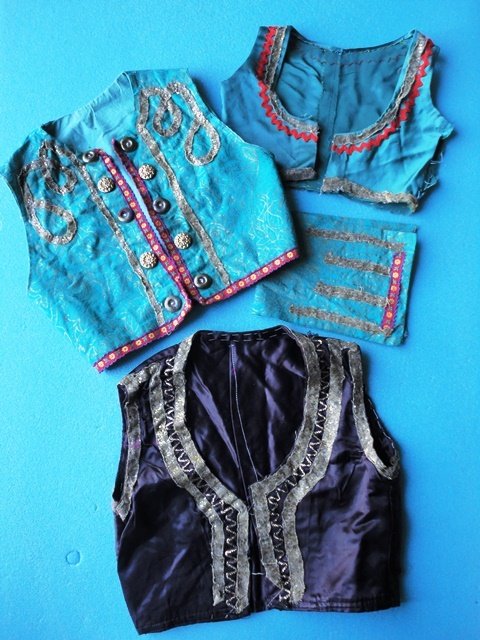
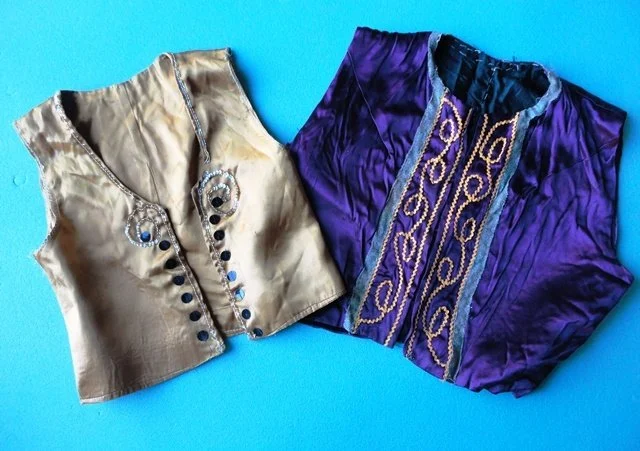
Images: Two photos with multiple colorful children’s sleeveless vests.
Designer unknown
1950S
Donated December 4, 2016
2016-12-002
This series of clothing items are all handmade worn by small children for AEPA family events in Everett, Washington. Included items are: vests, a bolero top, and jackets. The colors are still vibrant, blues and purples golds suitable for festivities. The garments are mostly made of cotton with satin finish, creating shine. Note all the trimming, loopy patterns, and buttons, all lovingly detailed by the crafter.
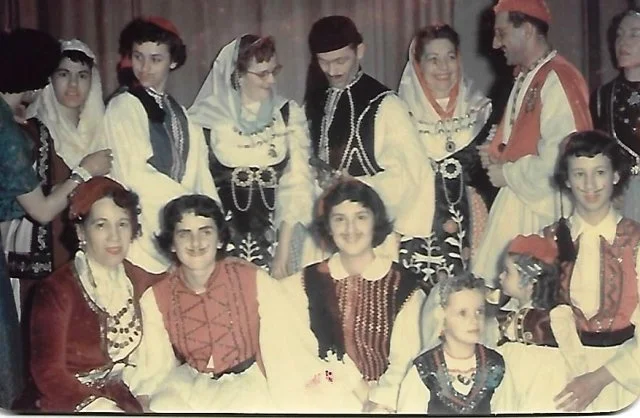
Half posed, half catching giggles and conversations lost to time, this picture was donated to the museum with the clothing in this set. The two children wearing the costumes in the front row of the photograph are the donor's sisters, Terry and Vickie Edwards.
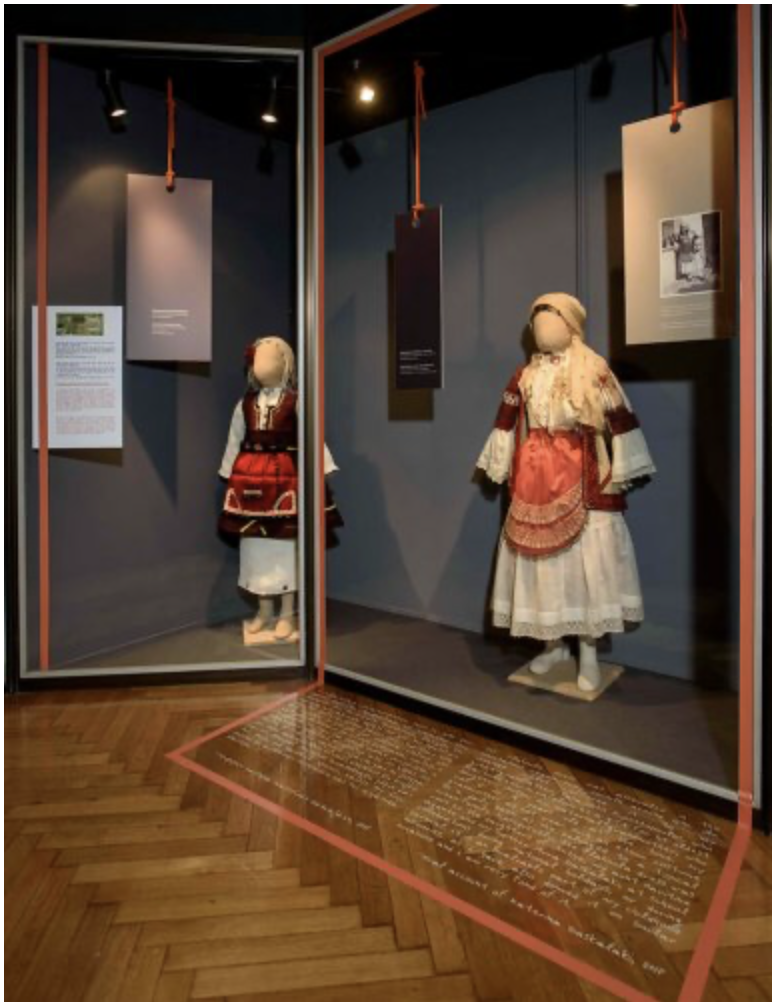
Children’s costumes in a display case in the Museum of the History of the Greek Costume in Athens.
Throughout costume history, including in Mediterranean dress traditions, clothing made for children old enough to walk about on their own was usually a smaller version of whatever an adult would wear. Clothes made specifically for children didn’t gain widespread adoption until the mid-19th century. The collection of children’s clothing in the museum reflect this older paradigm.
Video: Dr. Diana Demetrulias presents on her exhibit at the Maliotis Cultural Center about dolls in traditional Greek dress.
Check out the Greeks in Washington Museum’s collection of dolls similar to those discussed in the video.
Further Children’s Clothing Spotlights
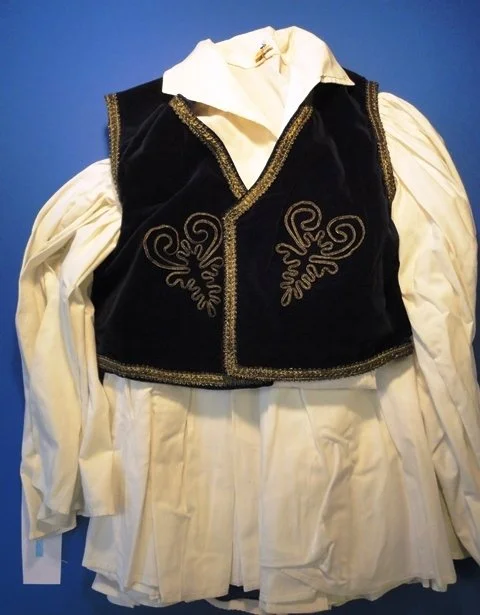
Child's Evzone Costume
Designer Unknown
1990s
Donated March, 2013
2013-06-001
This child-sized Evzone outfit (foustenela) is complete with the traditional long skirt and separate shirt and vest. The black is either cotton or wool, and the rest is likely white cotton. This costume was used by youth dance groups at the Greek Orthodox Church of the Assumption in Seattle, founded in 1939. When danced, gold embroidery on the outer layer catches the light as the wearer moves.
Juvenile Greek costumes
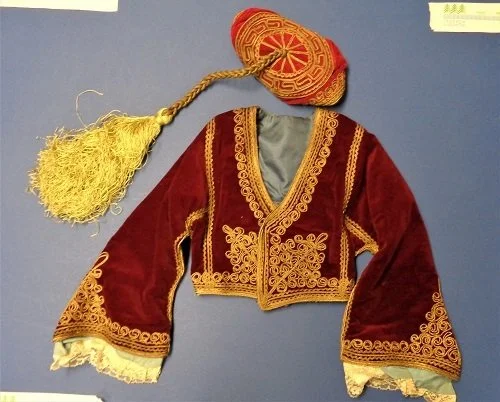
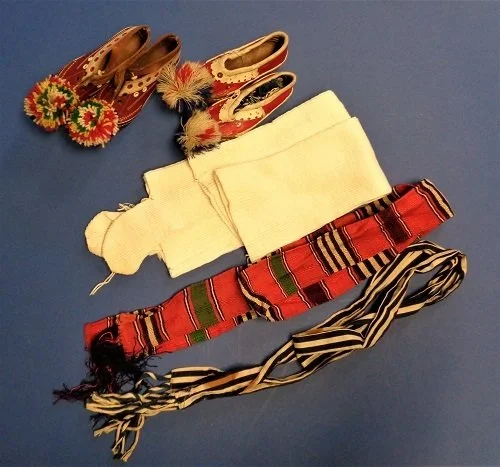
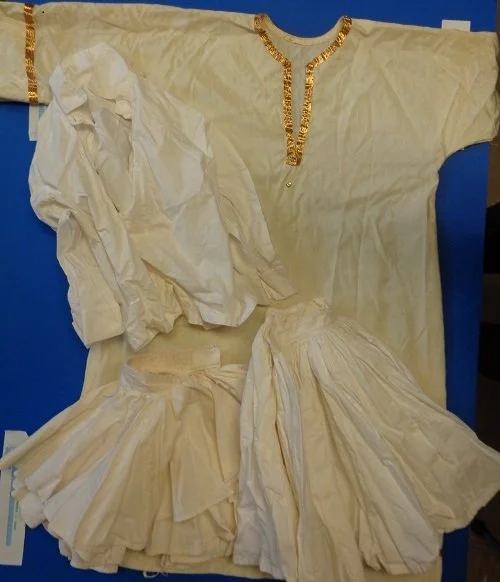
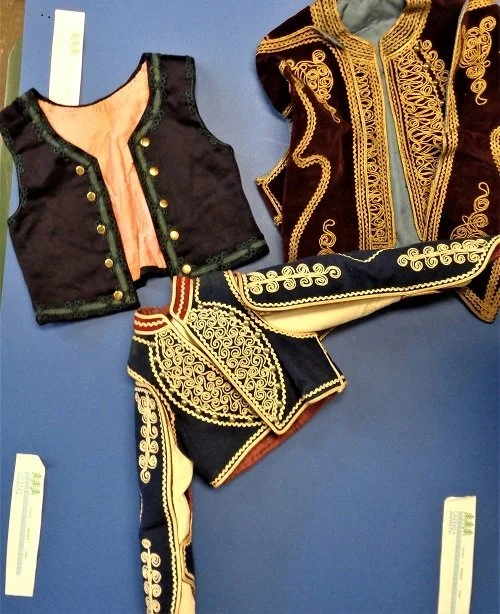
Image Gallery: Collection of four photos including clothing and accessories.
Designer unknown
20th century
Donated January 21, 2010
2020-01-002
These beautiful garments are a feast for the eyes, an entire wardrobe showcasing colors, patterns, materials, cuts, textures, and ornamentation. This series includes three vests, two foustaneles, one pair of leggings, two pairs of shoes, one tunic-like gown, a few garter belts, and a girls hat and jacket. Clothing fit for celebration, all in adorable kid sizes.
Your Style
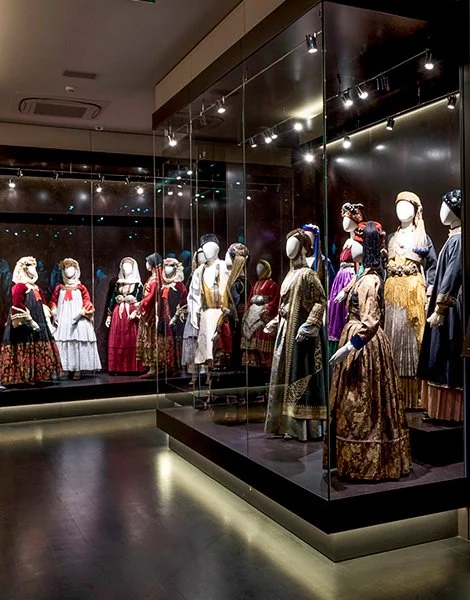
Image: Display at the Museum of Traditional Greek Costumes in Kalmata.
Use the comment box to tell us about your favorite article of clothing or outfit you own. What does it mean to you? How does it make you feel when you wear it? How does it express your identity?
Curated by Lane Eagles, PhD, June 2026.
Sources
Department of Greek and Roman Art. “Ancient Greek Dress.” In Heilbrunn Timeline of Art History. New York: The Metropolitan Museum of Art, 2000- (October 2003).
Welters, Linda, and Eleni Papathoma. 2023. “The Worth Question: Addendum to ‘Exhibition Review: Victoria G. Karelias Collection of Greek Traditional Costumes.’” Fashion Theory 27 (5). Abingdon: Routledge: 759–66.
"Weaving Memory, Reviving Tradition" - The Official Unveiling of the 1888 Fermeli.